
Gradient Books › First English Editions
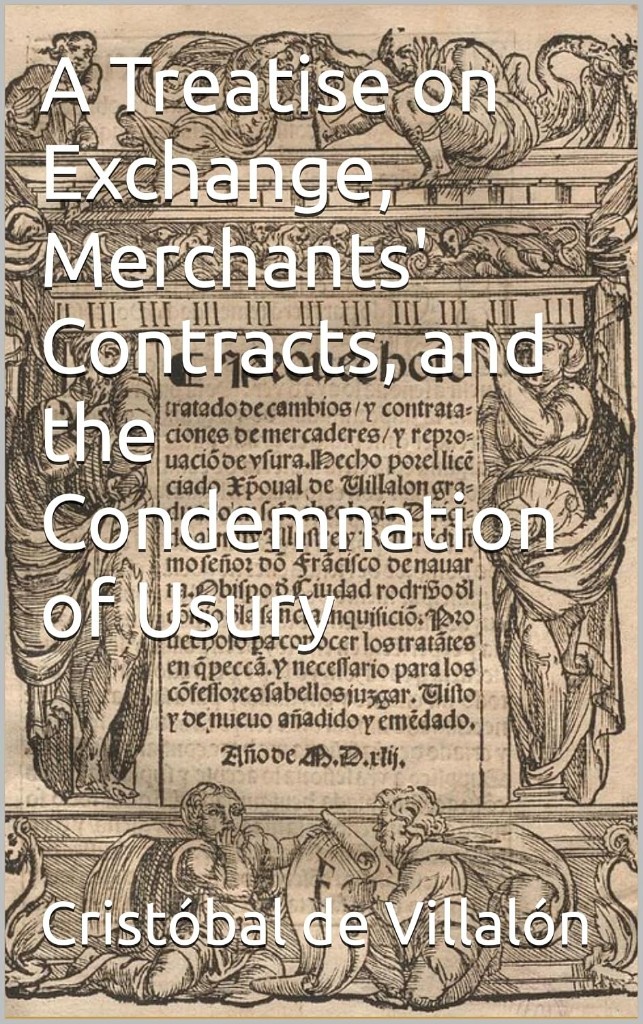
Long before economics became a modern discipline, the merchants of sixteenth-century Europe were already confronting questions that remain familiar today: What makes a profit legitimate? When does credit become exploitation? How should exchange rates be determined? And where is the line between compensation for risk and the taking of usury?
Published in Spain in 1541, Cristóbal de Villalón's A Treatise on Exchange, Merchants' Contracts, and the Condemnation of Usury belongs to the remarkable flowering of economic and moral thought associated with the age of the School of Salamanca. Written not only for scholars but for merchants and the confessors who advised them, Villalón brings the inherited Christian teaching on commerce into direct contact with the increasingly sophisticated financial world of Renaissance Europe.
His subject is practical as well as theological: money changing, commercial contracts, credit, lending, profit, and the ingenious arrangements by which merchants could either conduct legitimate business or disguise an illicit loan. The result is a vivid window into a world in which international trade and finance were advancing faster than the moral vocabulary used to understand them.
For readers interested in the history of capitalism, banking, economic thought, Catholic social teaching, or early modern Europe, Villalón offers a fascinating view of economic life at the moment when medieval commercial ethics were being tested by the emerging global economy.
This Gradient Books edition presents Villalón's full treatise in English for the first time (to the publisher's knowledge), making an important work of early economic thought accessible to English-language readers.